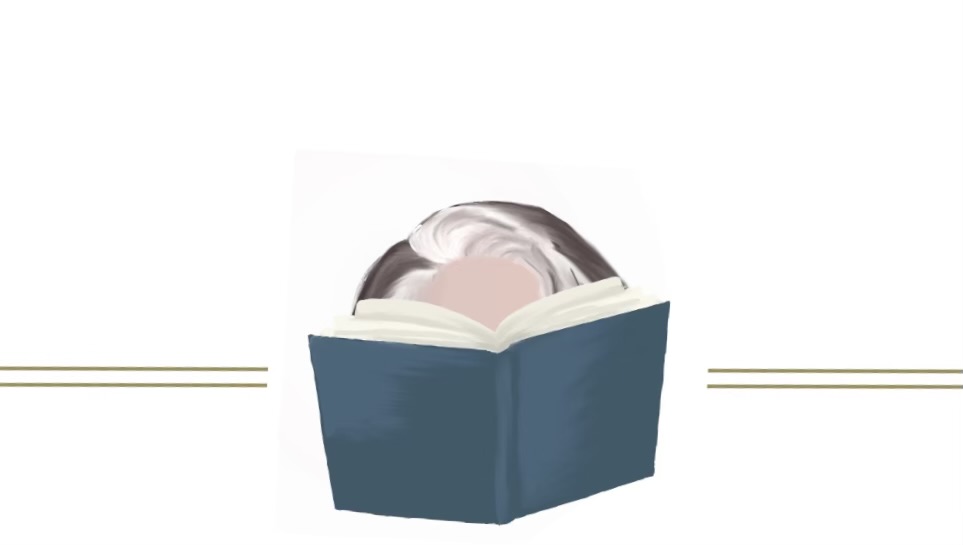

You are enough, but you must bring all of you to the text. Your thoughts. Your emotions. Your awareness.
Reading is interactive. It is a dynamic process between you and the marks on the page. Both sides of this relationship must be honored.
Not only what the book says, but also what you say back to the book.
Pay attention to this conversation in your brain while reading. Listen to the thoughts in your head. Tune in.
The brain is actually active while reading. It is not just “saying” the words on the page. In fact, giving voice to the writer’s words is only the beginning of the meaning making process. The bare minimum.
But many readers stop here. They “say” the words, get to the end of the page, clueless to the point of all those words. They behave as if the Meaning Fairy exists, the one who will float in on humming wings to deliver the sense of it with a tap of her wand.
As you already well know, she does not exist. You know it from those times you got to the bottom of the page and realized you were thinking about what to make for dinner, or playing a montage To Do List in your head.
You know that from your years in English classes, mystified by what others got that you simply did not. You know of her demise from that slight feeling of inadequacy that crops up when your friends, or colleagues start talking about books, and their Book Club experiences.
Make no mistake: she does not exist.
First important premise: Meaning is made by actively engaging with the text.
The Public Education and Business Coalition (PEBC), a nonprofit working with school districts in Denver, Colorado discovered seven different strategies the brains of proficient readers employ in order to make sense of texts. The strategies appear as a “voice” in your head. The first voice is that “word calling” voice, the bare minimum activity. The other voice is your conversational voice, the one that talks back to, and with the text. It could sound like: “oh, I bet he’s going to…” “Wait, what was that?” “I don’t like this character” “what’s that word mean?”
The words on the page cause you to think, to react. Observe & Listen. Become aware of this brain activity while reading, and harness it. Unlock the power of this conversation. Your own reactions to the text are the raw material of understanding.
Not “Getting It” when you read presents itself as a mystery, a locked labyrinth that responds to a key you do not have.
But you do.
The strongest tool you have is You – being yourself, observing your own interior thoughts, and reactions while reading. That’s it!
Like Glinda said in the Wizard of Oz, “You could go home all along, Dorothy.”
You have the tools, you just don’t know it.
So take heart! You bring to the text all you need. You have what it takes, you just need to know what to do with it.
How do you turn this apparent rejection at the gate into the welcoming guide it truly is? How do we learn to use our confusion to create clarity?
(images: Gundula Vogel from Pixabay & neotenist from Pixabay)

 The Comfortable Reader
Leave a comment